
Warner Bros. 100 Years of Storytelling
by Mark A. Vieira
Running Press/Turner Classic Movies, 360 pp., Hardcover, $40.00, also available as an e-book
Published May 30, 2023
Initially, it was Warner Brothers, named after Harry, Albert, Sam, and Jack, sons of Benjamin Wonsal and Pearl Eichelbaum of Krasnosielc, Poland. All four were born before the turn of the 20th century, and all but Jack were born overseas. By the time he came along, the Wonsals had left Poland for America, took the name change, and made their way from state to state, town to town, odd job to odd job until the movies came along. In 1918, the brothers released their first major motion picture, My Four Years in Germany, based on the book by Ambassador James W. Gerard, and used the money from that venture to build a studio in Los Angeles—first in Hollywood, then Culver City, ultimately in Burbank. On April 4, 1923, the studio was rechristened Warner Bros., and a Hollywood legacy took shape.
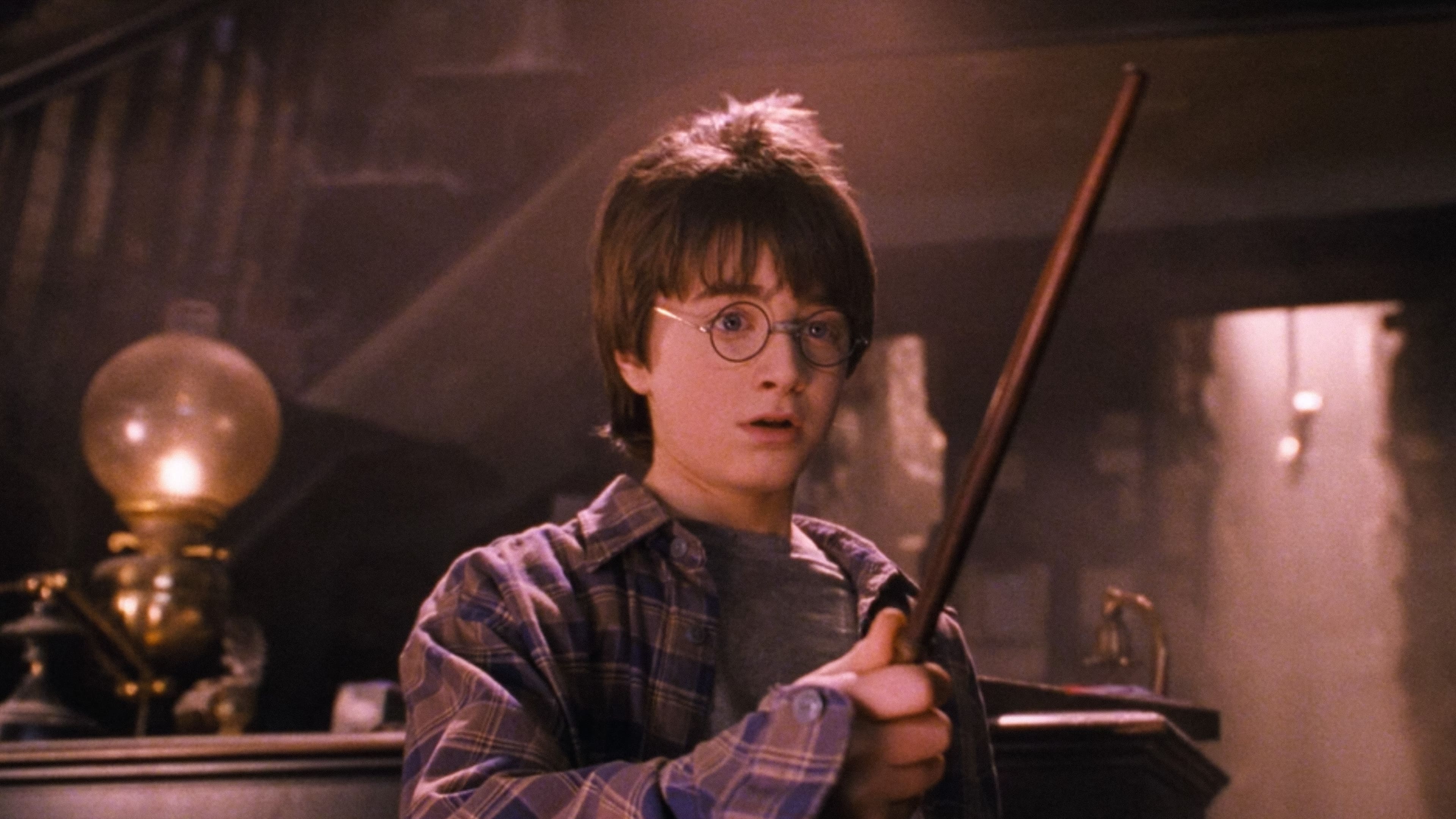
All of this is recounted briskly in Mark A. Vieira’s latest book, Warner Bros. 100 Years of Storytelling. Vieira has written several books on Hollywood, and here Vieira provides an all-encompassing overview of one of cinema’s most enduring studios. Here, they made social realist films (I Am a Fugitive from a Chain Gang), Technicolor adventure (The Adventures of Robin Hood), broke the sound barrier with The Jazz Singer, made Rin Tin Tin a star, brought Bugs Bunny and Porky Pig to life, made masterpieces like Casablanca and Rio Bravo, redefined what cinema could be with Bonnie and Clyde and The Wild Bunch, electrified minds with The Matrix, and brought a young Harry Potter to the screen.
But list the titles like that, and you miss the story. The story of Warner Bros. is the story of the 20th century, of boom years and depressions, adulation and the blacklists, technical innovations and artistic achievements, ownership and corporations. For that, Vieira divides his book into eleven chapters, one for each decade, and provides the story from 10,000 feet. Titles are tossed out like candy, sidebars highlight Academy Award nominations and wins, and promotional stills capture the pictorial allure of the stars. Many of these images are captivating and beautiful in their own right—particularly some of the black and white studio portraits—but it’s the early Technicolor images that truly enchant.
The images are the main draw here, though Vieira’s prose is playful, particularly in the pithy plot descriptions complimenting the titles referenced—be it calling Clint Eastwood’s Space Cowboys “a feel-tough movie” or Roland Emmerich’s 10,000 BC as “a film about prehistoric mammoth hunters, a demo often neglected by Hollywood.”
Warner Bros. 100 Years of Storytelling is a handsome book loaded with pictures and just enough history to whet budding film lovers’ taste. For those looking for a deeper dive into the studio’s history and the behind-the-scenes productions of these movies, time would be better served elsewhere. But if pictures are your thing, Warner Bros. 100 Years of Storytelling will not disappoint.
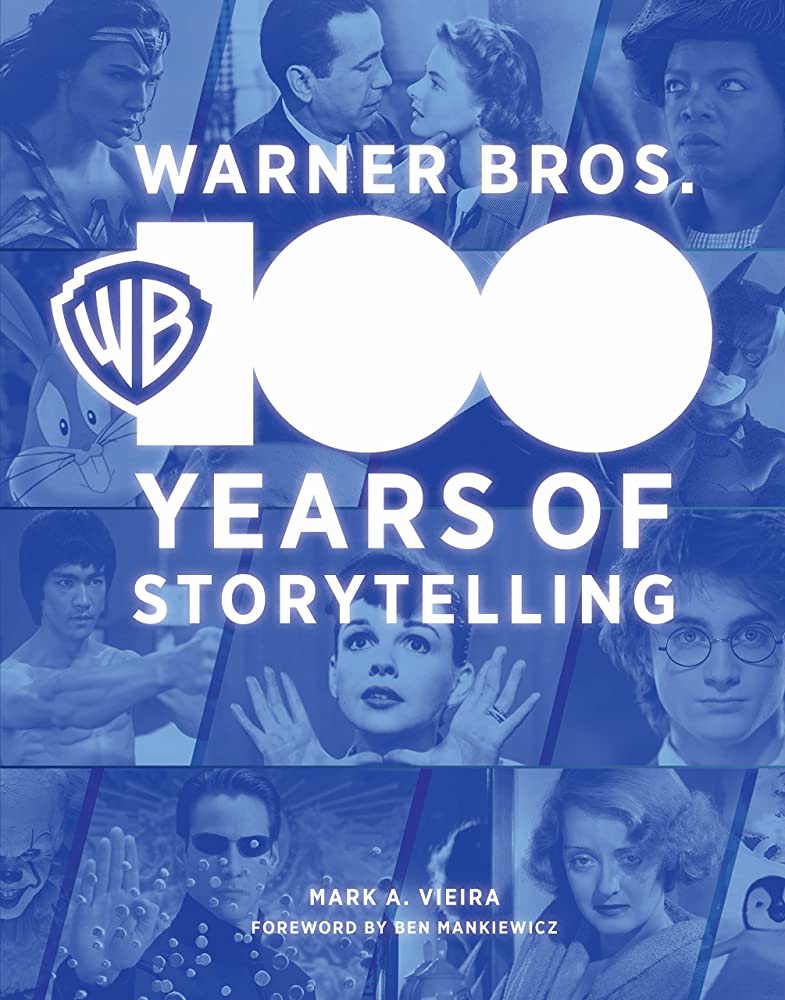
Warner Bros. 100 Years of Storytelling is available now in hardback and e-book from Running Press/TCM. Header photo courtesy Warner Bros., from left to right: Sam, Harry, Jack, and Albert Warner in 1921.
Discover more from Michael J. Cinema
Subscribe to get the latest posts sent to your email.
 Michael J. Cinema
You must be logged in to post a comment.