France, 1918: Raphaël (Raphaël Thiery) has returned from the war to end all wars. His wife, Marie, died sometime while he was fighting, work has dried up, and the townsfolk look down upon him. On the plus side, Raphaël meets his daughter, Juliette, born during his absence. Even in times of hardship, life provides reasons worth living for.
Based on the Russian novel Scarlet Sails by Alexander Grin, Scarlet from Italian filmmaker Pietro Marcello is a romantic film. There’s no major romance to speak of, but Marcello and cinematographer Marco Graziaplena capture a mood and a moment so intoxicatingly lush you feel like you fell into a fable.
Part of that revolves around the movie’s true center: Juliette. Played as a child by Suzanne Marquis, a teen by Asia Bréchat, and as a young adult by newcomer Juliette Jouan, Juliette learns hard work and beauty from her soft-spoken father. His hands are hardened by years of manual labor but delicate enough to carve faces from wood and tune pianos. Even in the late-1910s early-1920s, Raphaël and this small country community are relics of the 19th century.
And here, the casting shines. The villagers are not Hollywood faces, and similar to how actors and characters share names, there is a sense of realism grounding this fairy tale. The two exceptions belong to the lovely Juliette and the roguish Jean (Louis Garrel), a pilot who practically falls into Juliette’s life and steals her heart—much to the chagrin of the town urchin, Renaud (Ernst Umhauer), who covets Juliette the way a medieval dragon covets virgins and gold.

Shot primarily with handheld cameras, Scarlet shares the hallmarks of art-house filmmaking, but a brief animated sequence of a bird in flight, a moment where Juliette and her friend (Inès Es Sarhir) break into song, and the use of tinted frames are constant reminders of the fantasy unfolding before us. Those tinted scenes look like they were pulled from silent movies from the late 1910s, but the insertion of Juliette and Inés are reminders that things are never what they seem. Even the opening montage of soldiers coming home might be authentic archival footage, but it has been colorized and looks more in line with Peter Jackson’s phenomenal experiment, They Shall Not Grow Old, from 2018.
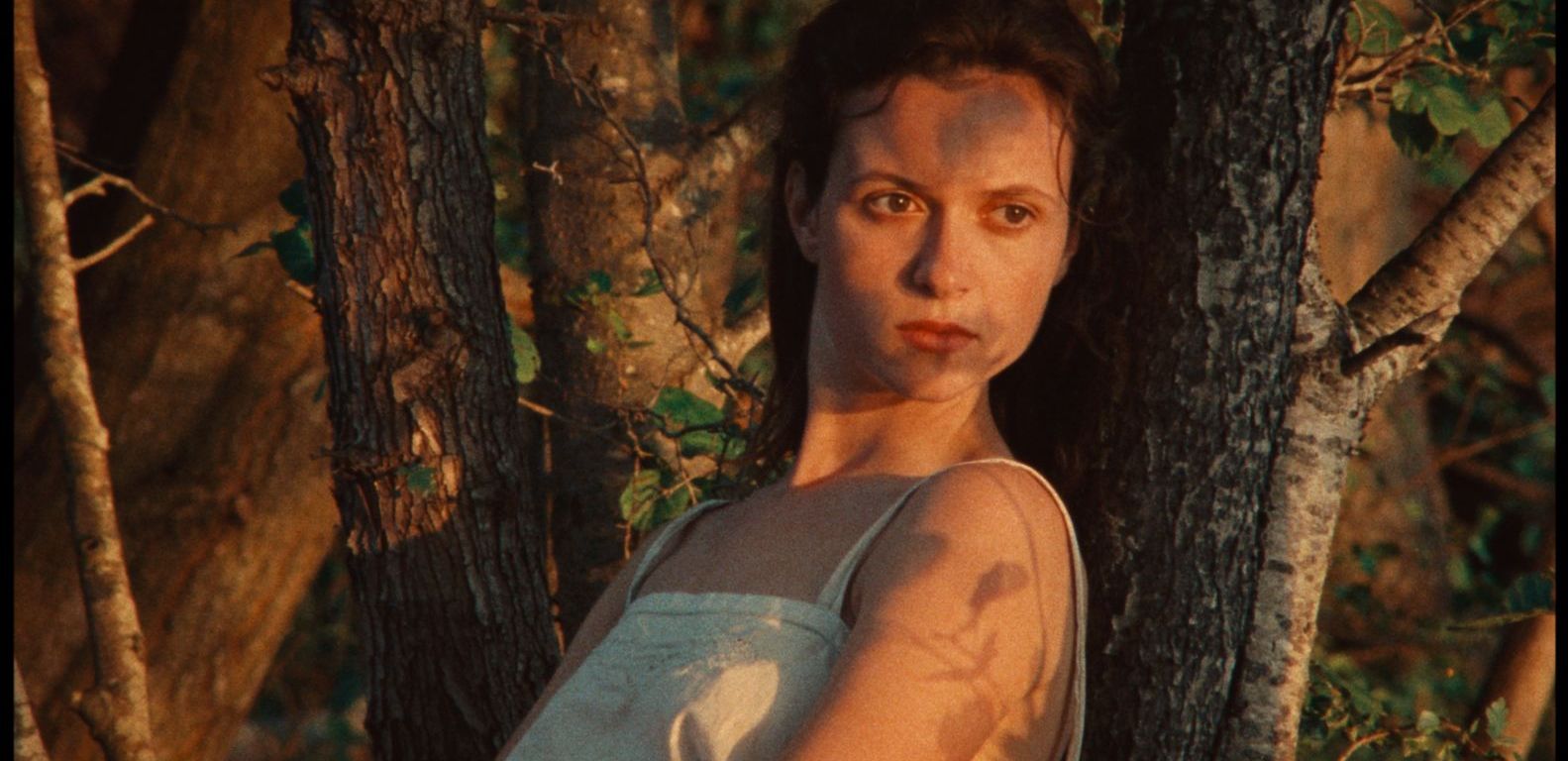
The rest of the movie looks even better. Marcello and Graziaplena concoct frames of everyday people doing everyday things that look like paintings by Rembrandt or El Greco. The deep shadows, the soft, warm light from single sources, the way sunlight pours through battered leaves—Scarlet is a world of textures.
Scarlet—a reference to the scarlet sails of a ship that will appear and take Juliette away—is such a beautiful movie that you almost overlook the languid pace the narrative takes. Marcello has no interest in playing by conventions, which can make for a frustrating watch at times. But then the camera finds Juliette in repose, sleeping against a tree as lovely as she, and the image blows through the room as gentle as a warm summer breeze.

Scarlet (2022)
Directed by Pietro Marcello
Written by Pietro Marcello, Maurizio Braucci, Maud Ameline
Based on the novel Scarlet Sails by Alexander Grin
Produced by Charles Gillibert, Ilya Stewart
Starring: Raphaël Thiéry, Juliette Jouan, Noémie Lvovsky, Louis Garrel, Inès Es Sarhir, Ernst Umhauer, Asia Bréchat, Sienna Gillibert, Suzanne Marquis
Kino Lorber, Not rated, Running time 100 minutes, Opens July 7, 2023

Discover more from Michael J. Cinema
Subscribe to get the latest posts sent to your email.
 Michael J. Cinema
One thought on “SCARLET”
Comments are closed.