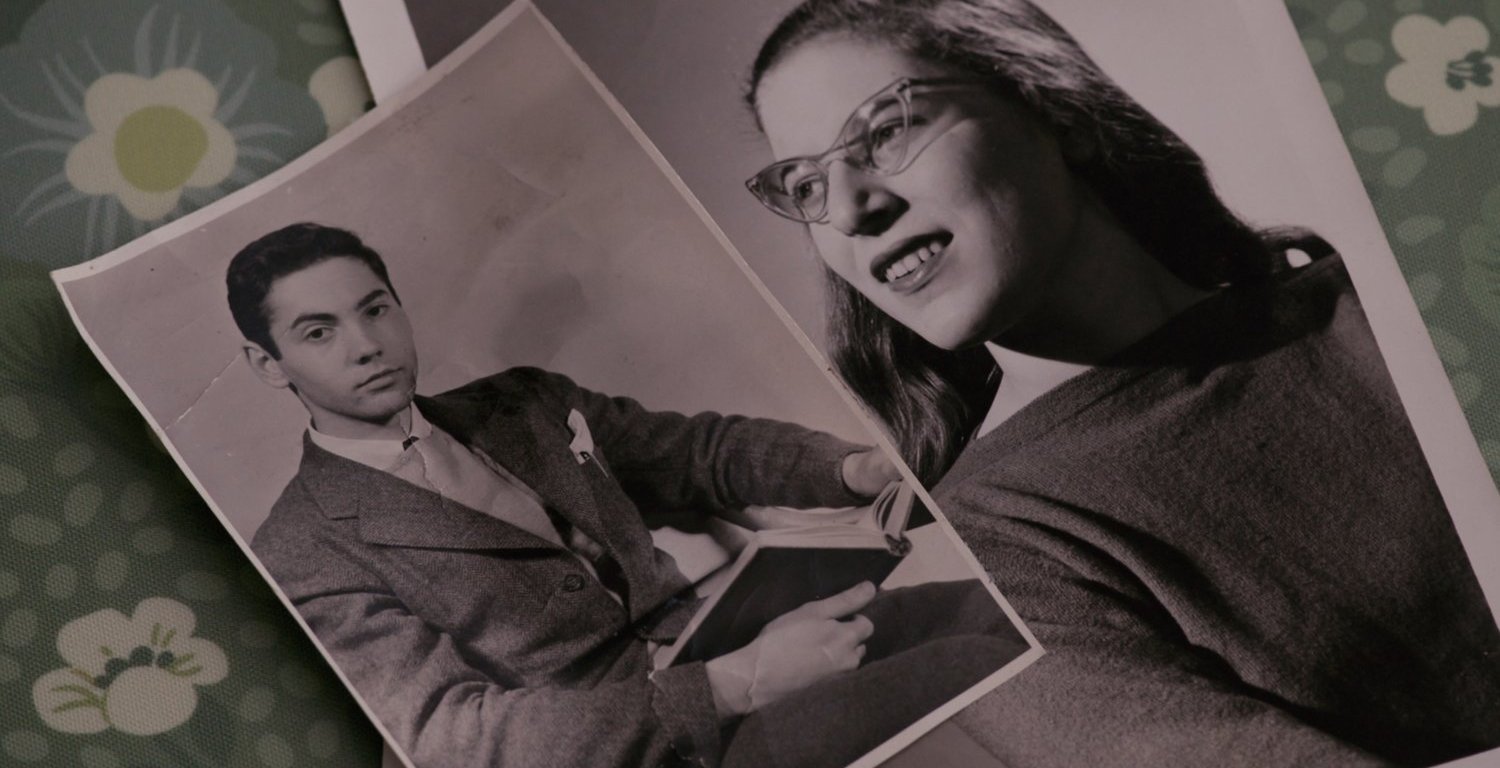
At 18, Ted Hall was the youngest scientist working on the Manhattan Project at Los Alamos. Ted was a thoughtful man, though a terrible soldier. As his wife Joan recounts, Hall hated the Army-issued hat he had to wear and never learned to salute properly. Joan doesn’t seem much for structured hierarchies either, laughing with great relish as she recounts her husband’s inability and unwillingness to fall in line.
Though Ted is the subject of A Compassionate Spy, the latest documentary from Steve James, Joan is the lifeblood. The two met following the war, fell madly in love, and stayed together until Ted’s death in 1999. Now Joan tells their tale: Two passionate leftists devoted to each other and the secret they kept hidden for many years.
And that secret is a complicated one. As World War II was winding down, it became evident to many at Los Alamos that Germany would never be able to build an atomic bomb and that their “gadget” would be used on another target: Japan. That troubled Ted because no Soviet scientists had been invited to work on the project in New Mexico, meaning that not only would the United States emerge from the war victorious, they would be the only nation capable of manufacturing nuclear weapons. The state of the world following the end of the war was of great concern to many, so Ted leaked secrets to the Soviets on how to build the bomb, specifically the implosion device, in hopes that if another nation had the bomb, then the U.S. wouldn’t hold a monopoly on apocalyptic destruction.
Ted had many reasons for passing nuclear secrets to the Soviets, but peace was his primary one. That may seem like an odd rationale, but maybe it worked. No nation has used a nuclear device in wartime since America dropped two on Japan—even though nine countries now have the capability. Should one ever use them on another, retaliation in kind is all but expected—mutually assured destruction, they call it, the end of everything.
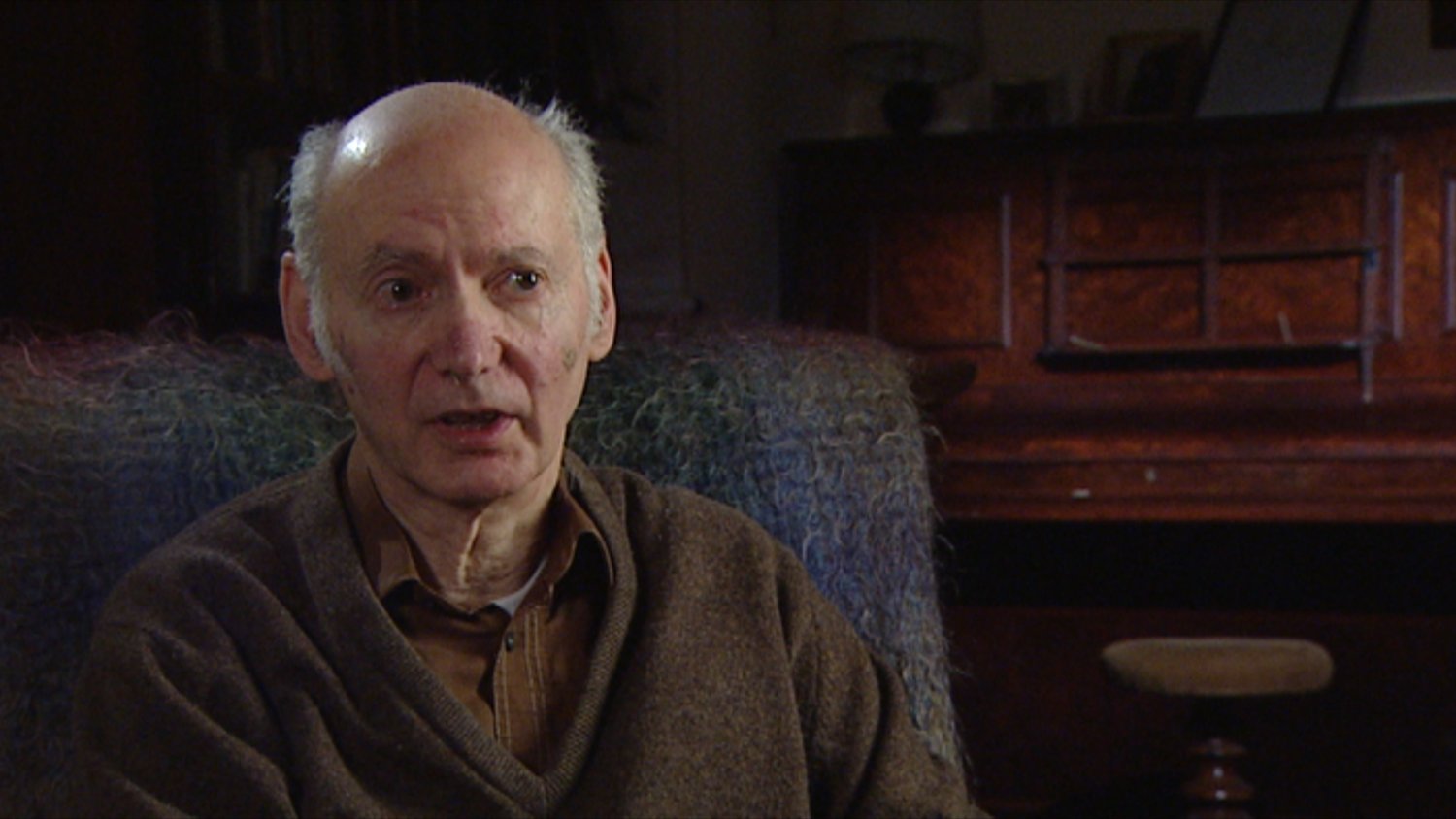
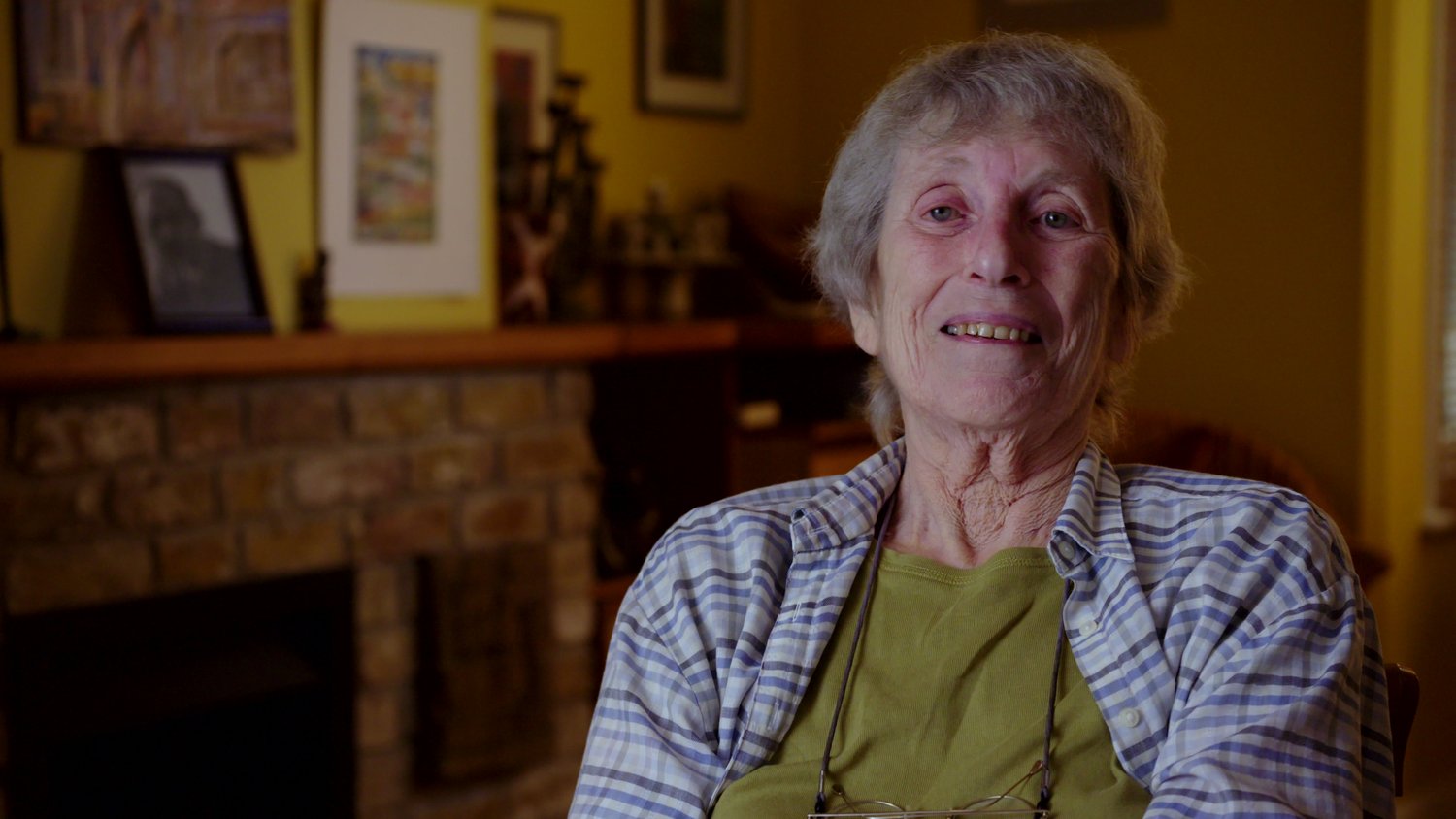
But that sword of Damocles does not hang over A Compassionate Spy the way it does in Oppenheimer. Instead, James focuses his story on Ted and Joan, often aligning the archival footage of Ted telling his story in the 1990s with contemporary footage of Joan telling her story. In the archival footage, Ted sits on a couch looking toward an interviewer seated to his right. In the contemporary footage, Joan sits in a chair, looking at James on her left. When the two images are edited together, it’s like Ted and Joan have been reunited.
What doesn’t work are the narrative reconstructions, with actors J. Michael Wright and Lucy Zukaitis playing the roles of young Ted and Joan. These segments fill in gaps where footage doesn’t exist, but they have a dreamy sheen that is more distracting than illuminating. It doesn’t help that they feel unevenly distributed throughout the narrative: a lot up front when the two meet at Harvard, not much in the middle, and a little more toward the end when the FBI starts harassing the Halls.
But every time James returns to his modern-day interviews with Joan, the doc pops with energy and heart. Even better, James makes himself a friend of Joan rather than an interrogator, imbuing A Compassionate Spy with a geniality you don’t often find in these types of stories. When James asks about the parameters of Joan’s relationship with Ted and their mutual friend Saville Sax, Joan smiles and responds: “I don’t want to talk about those things. They’re too private.” So James changes his question, finds another path, and discovers something just as interesting to talk about. Ted Hall may have been the compassionate spy, but Steve James is the compassionate director.
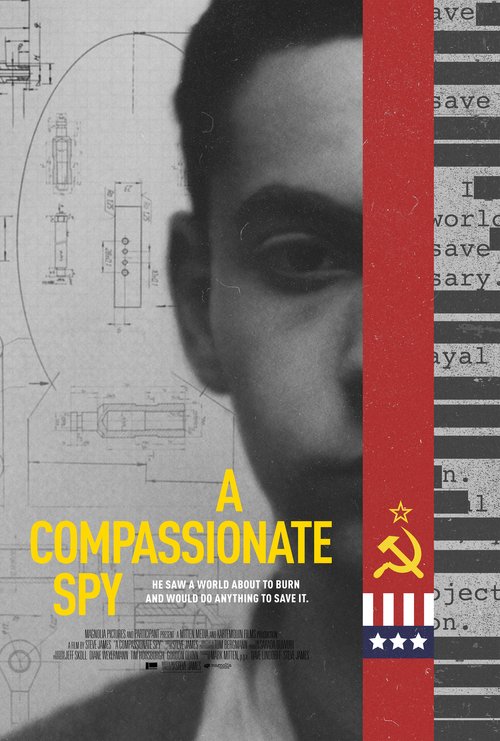
A Compassionate Spy (2022)
Directed by Steve James
Produced by Steve James, David Lindorff, Mark Mitten
Magnolia Pictures, Not rated, Running time 101 minutes, Opened Aug. 4, 2023, in limited release

Discover more from Michael J. Cinema
Subscribe to get the latest posts sent to your email.
 Michael J. Cinema
You must be logged in to post a comment.