
Why am I always in the wrong without knowing what for or what it’s all about?
So cries Josef K. The man is on trial, though his appearance before a court of his peers is brief. The rest of the time, he’s trying to establish his innocence while a case builds against him. What his crime is, K. is never told. Though he knows he’s guilty of something. Maybe it’s something he did long ago that’s finally caught up to him. Maybe it’s a lot of little infractions that have accumulated into something significant. Or maybe his sin was simply inherited. Whatever it is, it’ll be the death of him, and K. knows it.
Published in 1925, one year after the author’s death, Franz Kafka’s The Trail is a work of existential resignation that resonates to this day. The plots Kafka conceived and the characters he drew feel like harbingers of modern-day society.
But when Kafka wrote The Trial, the world had not yet experienced the atrocity of the Holocaust. It had by the time producers Alexander and Michael Salkind offered Orson Welles the chance to turn the posthumously published novel into a movie. That’s why Welles refused to let his Josef K. (Anthony Perkins) lie down and die because, as Welles would say years later, “After the Holocaust, we are all Jewish.” Sure, his K. dies, but not passively and not resigned. He dies laughing defiantly. It’s a switch, but he still dies.

Welles understood The Trial in ways few could. His movie is teeming with accusative faces and empty spaces. Welles often worked on tight budgets, sometimes no budgets at all, which is why Macbeth is so atmospheric—fog does a great job covering unadorned sets—and quick cuts allow for a cast of dozens to look like an army of hundreds in Chimes at Midnight. Heck, even the movie where Welles had the greatest amount of financial freedom, Citizen Kane, is confined to small sets and a dozen or so players. The Trial is gargantuan by comparison. Hundreds and hundreds of extras fill cavernous rooms that stretch on into forever. Stacks of paper piled high feel like every thought in human history has been recorded and stored here. And Brutalist structures fill cinematographer Edmond Richard’s frames in ways that make The Trial occasionally dip its toe into the realm of sci-fi. The whole thing is immense.
Which reflects K.’s anxiety perfectly. Welles doesn’t let K. off the hook by making him an innocent victim. Instead, K. is a weasel, a bureaucratic middleman climbing his way up but acting like a goody two shoes. “What are you, informers?” he screams at the men he works with who show up one day in his apartment. “What would you have to inform about?” K. asks with much less force.
Plenty, in K.’s mind. Is that why he’s always apologizing? His girlfriend, Marika Bürstner (Jeanne Moreau), calls him on it. “It’s never any use, is it, apologizing?” K. says. “It’s even worse when you haven’t even done anything but you still feel guilty.”
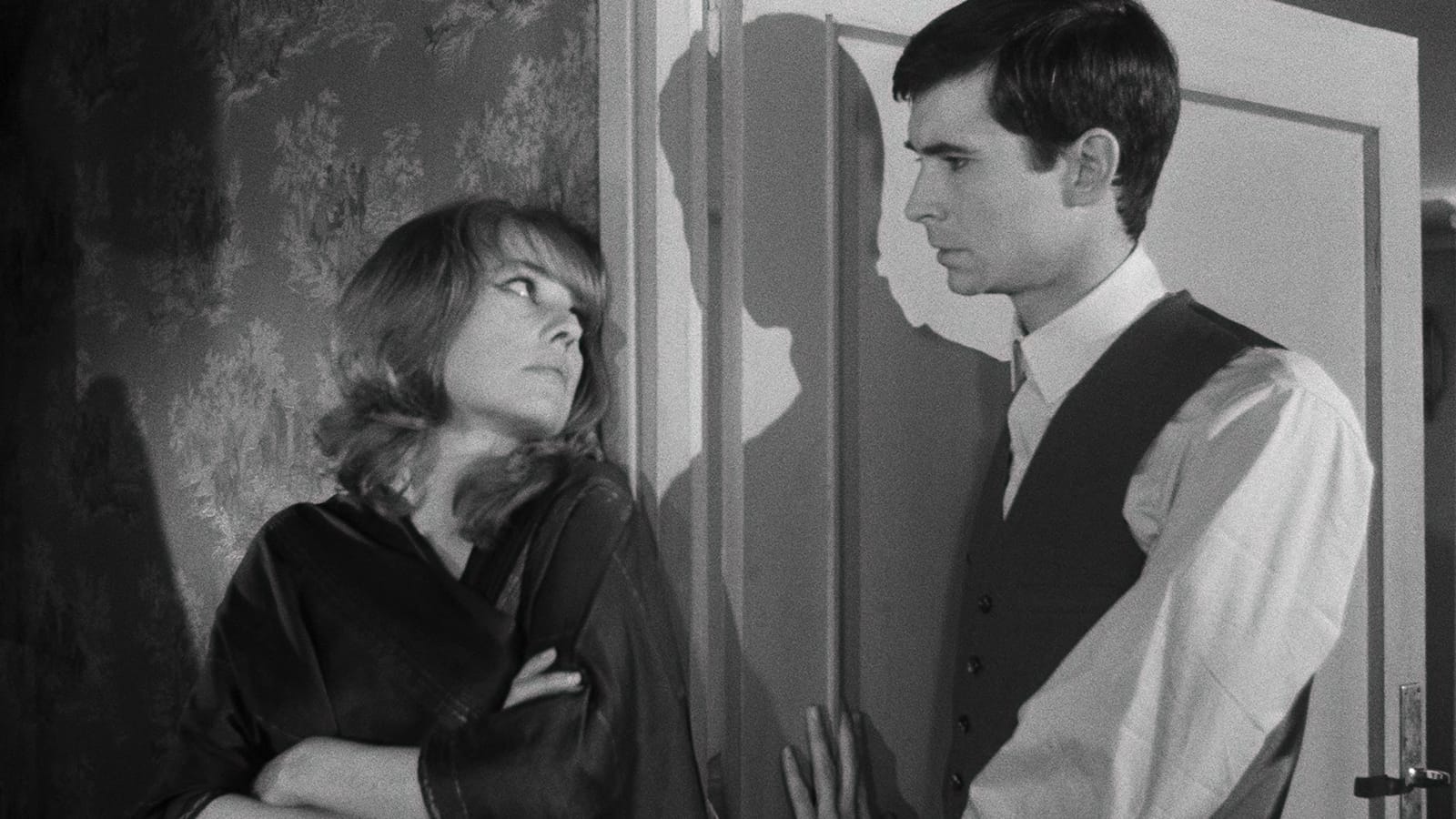
Marika is one of three women who are either enticing or dismissing K. Hilda (Elsa Martinelli) and Leni (Romy Schneider) are the others. Leni is the nurse of Albert Hastler, the advocate (Welles), a man whom K. needs on his side. It doesn’t happen. Instead, the advocate is the only one who explains to K. just how futile his plight really is.
To do this, the advocate uses an old story and a series of pinscreen images. The same story and images that open The Trial, the ones K. is possibly dreaming of. When I first saw The Trial over 15 years ago, it was via a bad transfer and crummy clarity. Add in the occasional out-of-sync dialogue—Welles shot The Trial without live sound like a spaghetti western—and the whole thing came across like mud. But I could tell something was there, a sort of squint, and you might find a masterpiece.
Now restored and released on 4K UHD and Blu-ray from The Criterion Collection, The Trial sparkles. The individual pinpricks from that opening prologue, the sharpness of the shadows as K. runs up and down stairs, and the depth Richard achieves in the exterior scenes are magnificent. Then there’s the scene shot in the at-the-time defunct Paris train station, Gare d’Orsay, with hundreds of typists at desks working away. It’s totally overwhelming. I know I say this every time I watch a Welles movie, but this one might be his masterpiece.
Available now from Criterion, The Trial also features an informative feature-length commentary from Welles scholar Joseph McBride, a long-abandoned essay film from 1981, Filming “The Trial,” which features Welles giving a post-screening Q&A at the University of Southern California, a French TV show featuring Moreau and Welles chatting over dinner, an archival interview with cinematographer Richards, and a booklet essay from author Jonathan Lethem.
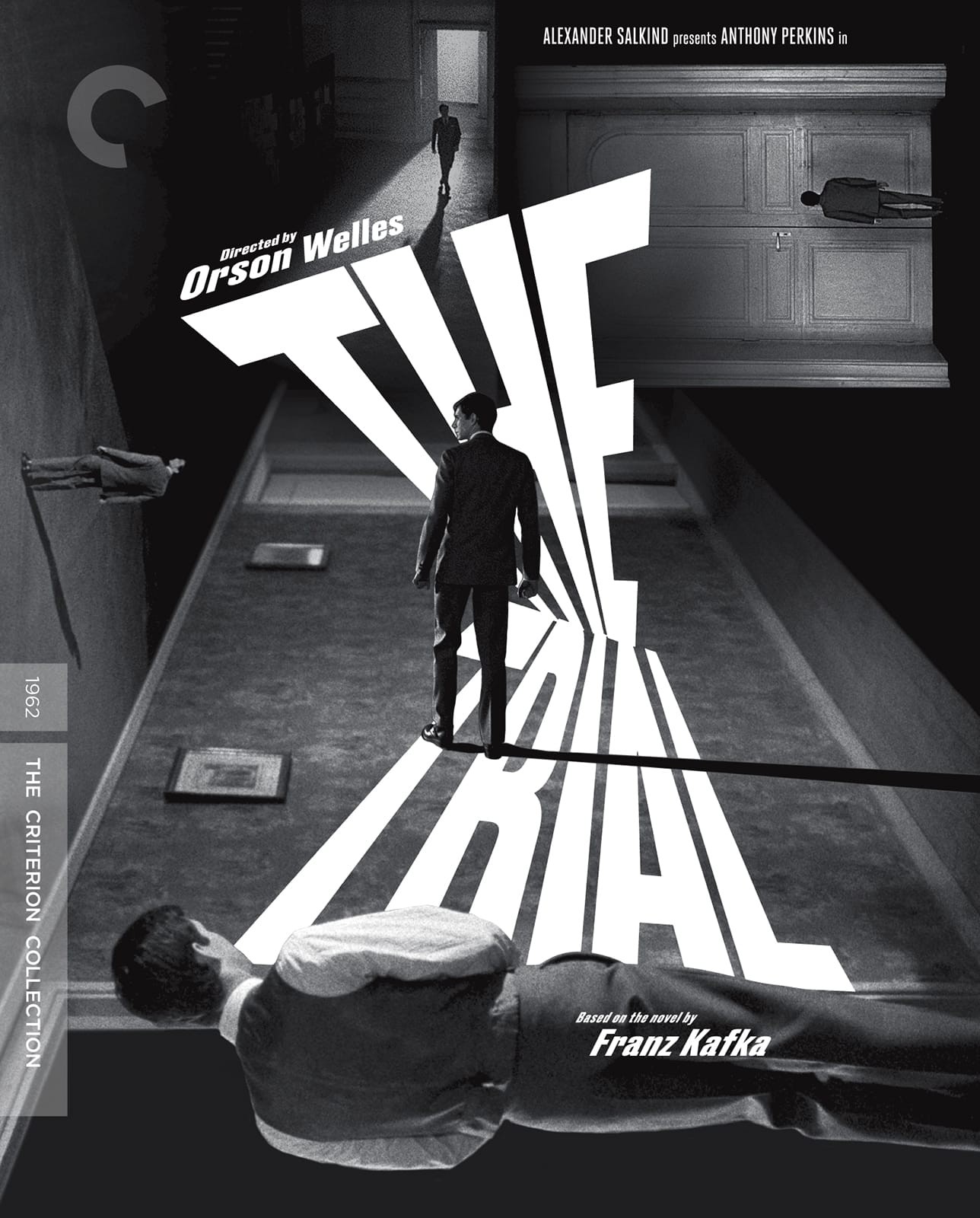
The Trial (1962)
Written and directed by Orson Welles
Based on the book by Franz Kafka
Produced by Alexander Salkind, Michael Salkind
Starring: Anthony Perkins, Jeanne Moreau, Elsa Martinelli, Suzanne Flon, Madeleine Robinson, Romy Schneider, Akim Tamiroff, Orson Welles
Rialto Pictures, Not rated, Running time 118 minutes, Premiered August 1962 at the Venice Film Festival
Discover more from Michael J. Cinema
Subscribe to get the latest posts sent to your email.
 Michael J. Cinema
You must be logged in to post a comment.