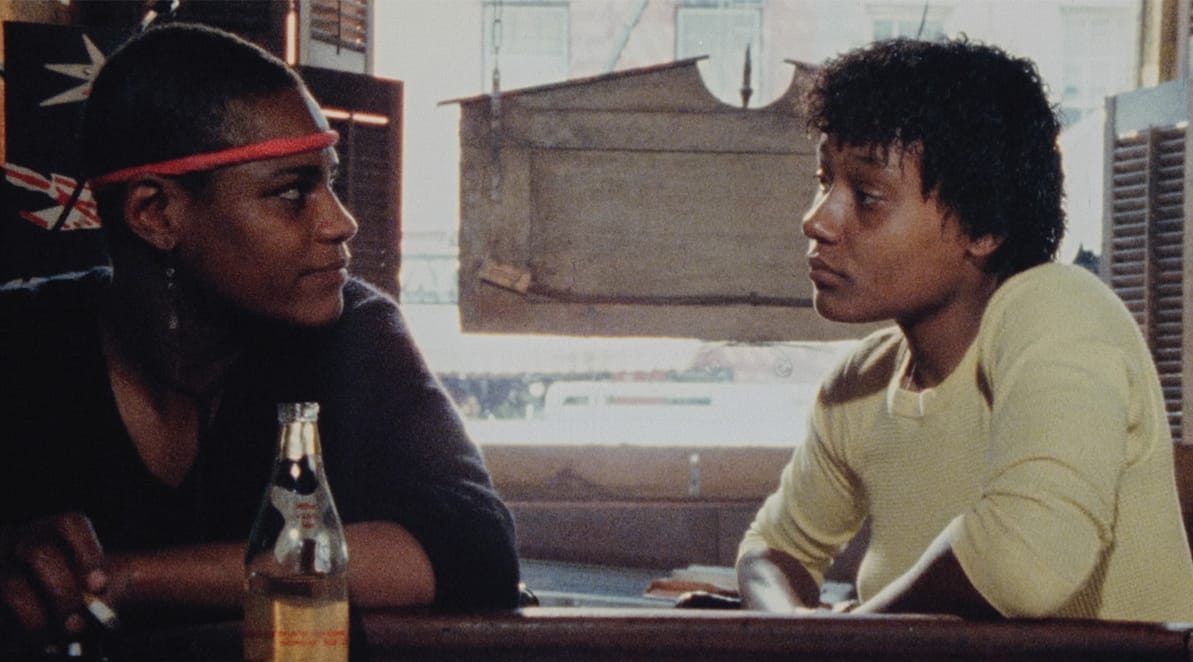
It’s been 10 years since the Social-Democratic Revolution—“the most peaceful revolution the world has ever known”—but the women have been left behind.
So opens Lizzie Borden’s 1983 Born in Flames, a rally cry committed to celluloid that’s bound to stir up several opinions while watching.
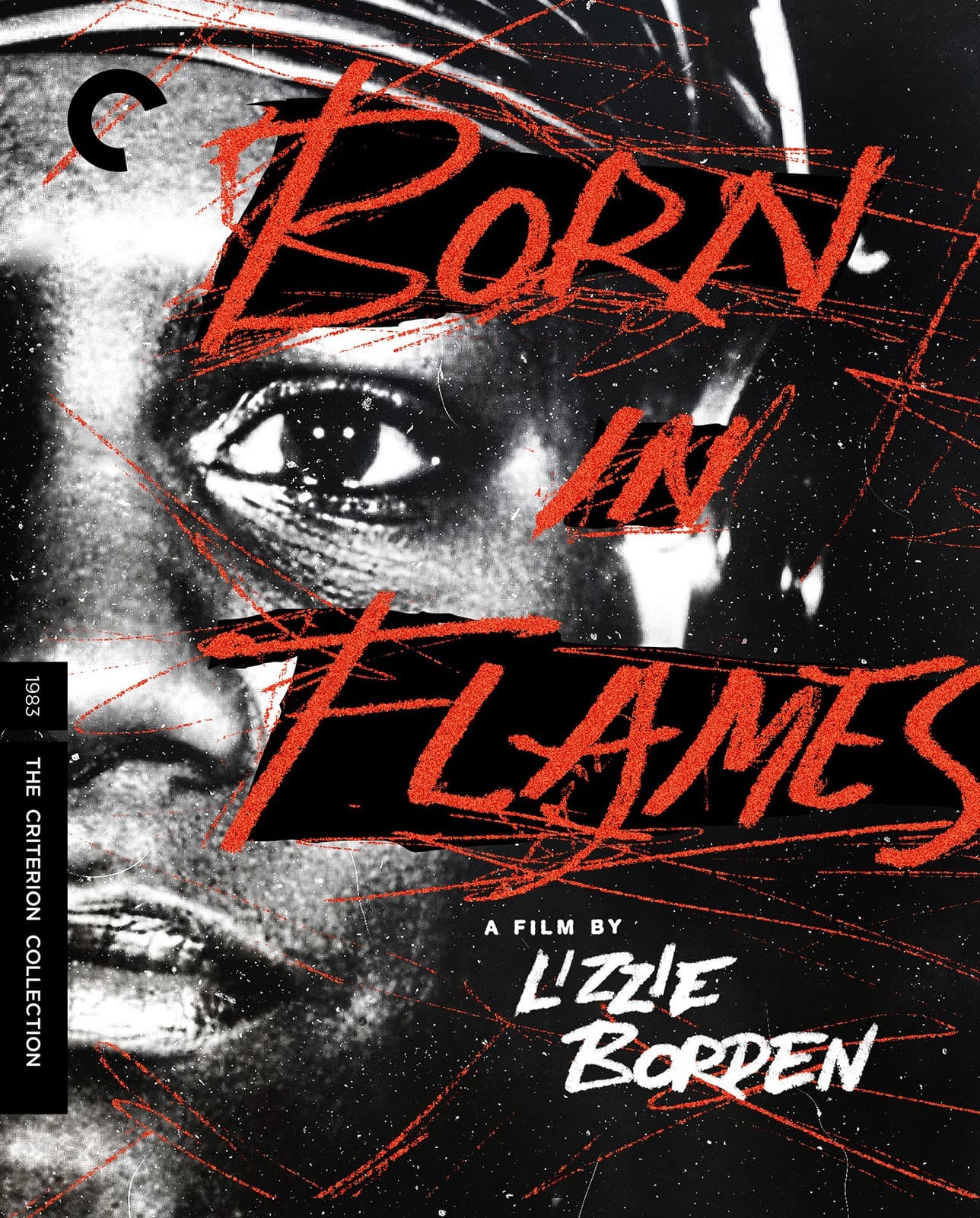
Borden functions as Born in Flames’ producer, director, editor, sometimes cinematographer, and uncredited screenwriter. As she explains in a 2025 commentary track on Criterion Collection’s new Blu-ray set, job titles were murky and caused confusion with the guilds. Like her previous film, 1976’s Regrouping—also included on Criterion’s set—Borden attempted to work in tandem with talent in front of and behind the camera to create a collective perspective. But as Borden discovered with Regrouping, cinema eventually ends up in one set of hands, and Born in Flames is Borden through and through. I don’t mean that her position feels authoritarian or stifling. She is a storyteller of the oral tradition, and for her ’83 agitprop masterpiece, Borden gathered many voices.
There’s Isabel (Adele Bertei), the host of Radio Ragazza, who fires up listeners through poetry and music. There’s Adelaide Norris (Jean Satterfield), a construction worker laid off after the revolution for occupying a man’s job. There’s Honey (Honey), the host of Phoenix Radio, who informs listeners and provides the framework for the cause. There are the editors of the Socialist Youth Review (Pat Murphy, Kathryn Bigelow, and Becky Johnston), the activist Zella Wylie (Florynce Kennedy), the Women’s Army, and many more. Borden layers them all with efficacy, while centering her narrative on a queer, Black woman—Honey. As Borden assesses from a contemporary perspective, Born in Flames is about intersectionality decades before the phrase was coined.
Sounds uplifting, but Born in Flames is also about the frustration of movements. As one character points out, the so-called Social-Democratic Revolution gave citizens a government that was neither socialist nor democratic. Instead, the revolution sought to reinforce old structures, first by firing Adelaide off the construction site, then by suggesting women could be economically compensated for housework. That’s where Wylie draws the line, identifying “wages for housework” as a systematic way to place women back inside the home. None of the women in Born in Flames are interested in traditional roles, least of all the bicycle brigade, who roam the streets of New York City with whistles and interrupt sexual assaults as they happen—a moment that calls to my mind the ending of On Becoming a Guinea Fowl. Naturally, the FBI labels these women terrorists.

Who gets the label “terrorist” and “revolutionary” is a question worth holding in your head while watching Born in Flames. Borden doesn’t see any of these women as terrorists, yet the movie ends with the image of a broadcast tower dynamited from the World Trade Center—an unfortunate prophetic vision. The Twin Towers were finished in 1975 and transformed the New York skyline. They were a focal point for many filmmakers, including Borden, who doesn’t just end her movie atop those buildings, but starts Born in Flames at the bottom, looking up at the buildings’ soaring lines. From yesterday’s eyes, those towers must have invoked awe—maybe even a way toward a better future.
Born in Flames is an argument presented with such baldness that it’s as easy to embrace as it is to dismiss. Yet, Borden’s film persists 40 years on. And not simply because viewers agree with the message, but because the kinetics with which Borden presents it are electrifying. If you watch the movie at home, wear headphones. The images are already an impressive assembly of documentary observation and formal construction, but the soundtrack—layers of disparate voices from the women and the FBI tracking and analyzing them—simultaneously place the audience in the shoes of participant and voyeur, oppressed and oppressor. It is a magnificent piece of work.
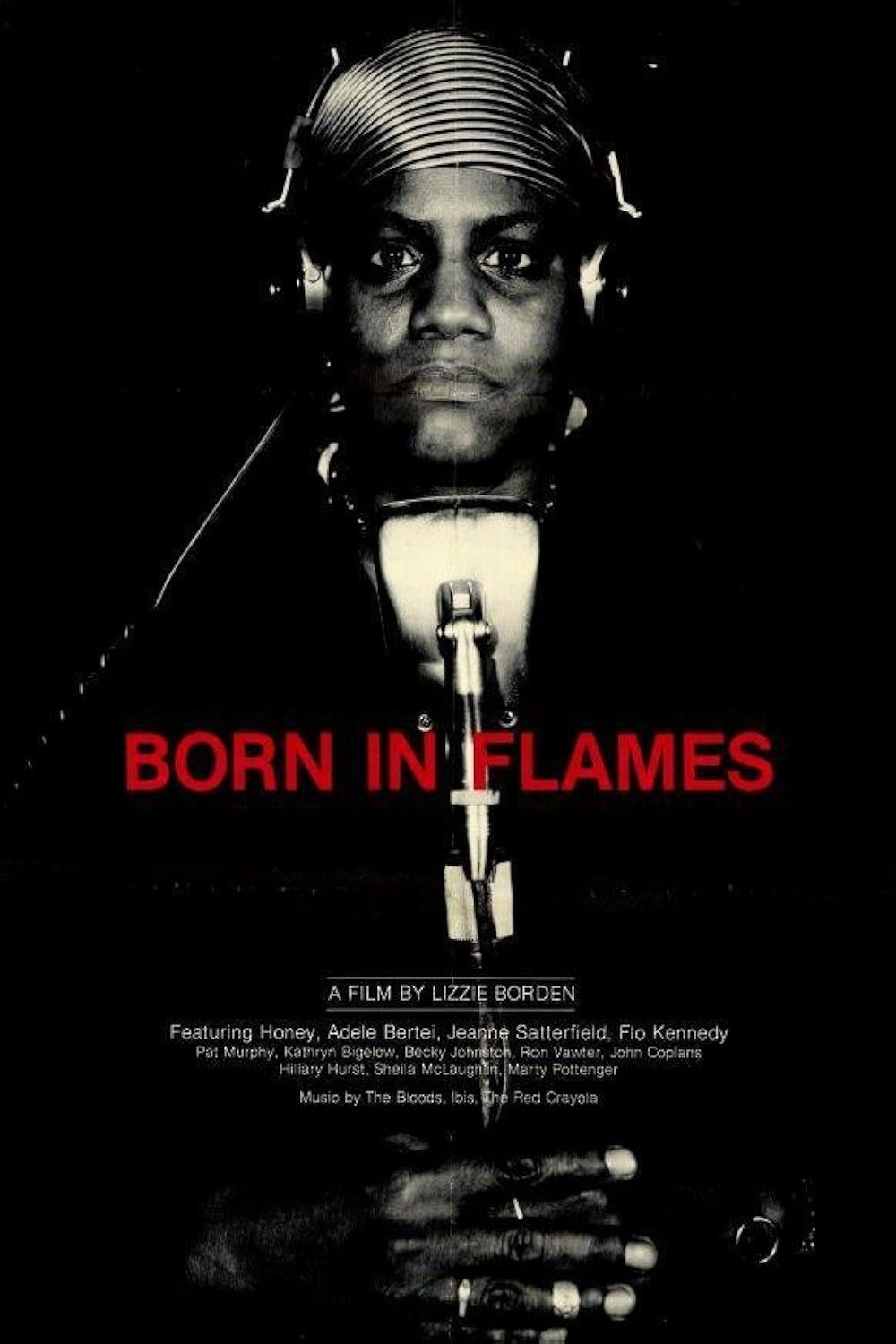
Born in Flames (1983)
Produced and directed by Lizzie Borden
Story by Ed Bowes
Starring: Honey, Adele Bertei, Jean Satterfield, Florynce Kennedy, Pat Murphy, Kathryn Bigelow, Becky Johnston, Hilary Hurst
First Run Features, Not rated, Running time 80 minutes, Premiered Feb. 20, 1983, at the Berlin International Film Festival
Discover more from Michael J. Cinema
Subscribe to get the latest posts sent to your email.
 Michael J. Cinema
2 thoughts on “BORN IN FLAMES”
Comments are closed.