Martin Scorsese knows crime. Growing up on Elizabeth Street in New York City’s Little Italy, crime and a criminal code surrounded him like quicksand. Struggle, and you might escape. Succumb, and be dragged to the bottom.
The two poles in Scorsese’s life, the cinema and the church, were his ways out of that vortex. That might explain why so many of Scorsese’s films convey a sense of urgency. If he can’t make this picture, tell this story, then is it possible to go on living? That’s certainly the engine behind Mean Streets, Raging Bull, The Last Temptation of Christ—each feels like a last gasp. So, too, does his most recent narrative, Killers of the Flower Moon, now available in a beautiful 4K UHD and Blu-ray set from The Criterion Collection.
The genesis of Killers dates back to the 1970s when Scorsese visited the Pine Ridge Reservation in South Dakota. Mean Streets had granted the young director some cachet, and there was an option to direct a movie about the Wounded Knee Massacre starring Marlon Brando. But the trip forced Scorsese to come face-to-face with systemic oppression so troubling the New Yorker could not process it. A filmmaker must understand the story they’re telling and the people who populate it. But what he encountered at Pine Ridge was beyond him.
The project never happened. Scorsese went to Hollywood and spent the next seven decades chronicling American crime in its many manifestations. In each, he charges the audience to recognize the monster in the mirror. To borrow a line from Killers, “Can you find the wolves in this picture?”
Fast-forward to 2017 and the publication of David Grann’s bestselling nonfiction history, Killers of the Flower Moon: The Osage Murders and the Birth of the FBI, and the story to make sense of it all arrived. Though it took time and a few iterations to find its present state. According to interviews with Scorsese and his collaborators—included in Criterion’s set—early drafts of Killers focused on FBI Agent Tom White (at this point to be played by Leonardo DiCaprio) arriving on the Osage Reservation in Oklahoma to investigate a slew of murders—all Osage, mostly women.
The reason for the murders: money. Specifically, money derived from oil reserves discovered after the Osage were removed from Missouri, Kansas, and Arkansas, and settled on a reservation in Oklahoma deemed worthless by the United States government. That was before oil was discovered. After, the Osage became the richest population per capita in the world, and many a white man flocked to the area. Some took Osage women as wives. Then the wives started dying. As one sister tells another: “This blanket is a target on our backs.”
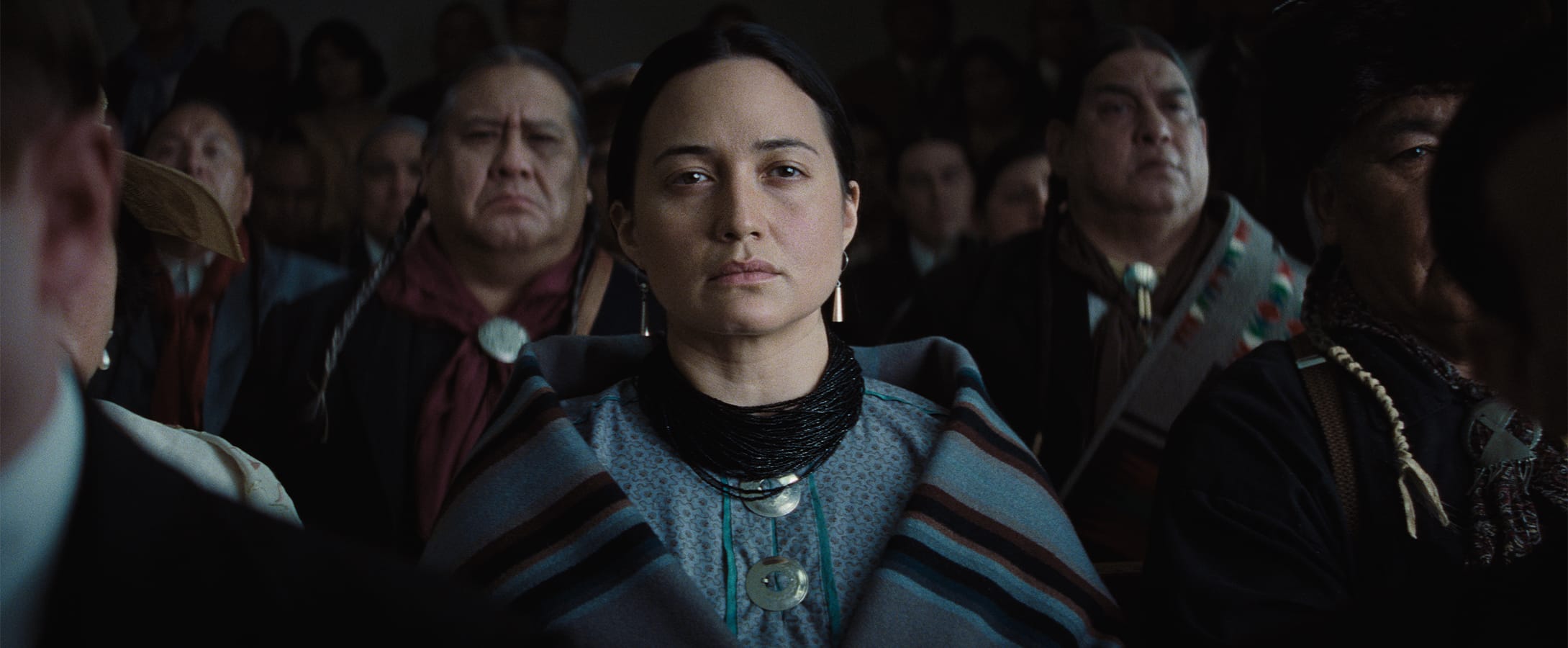
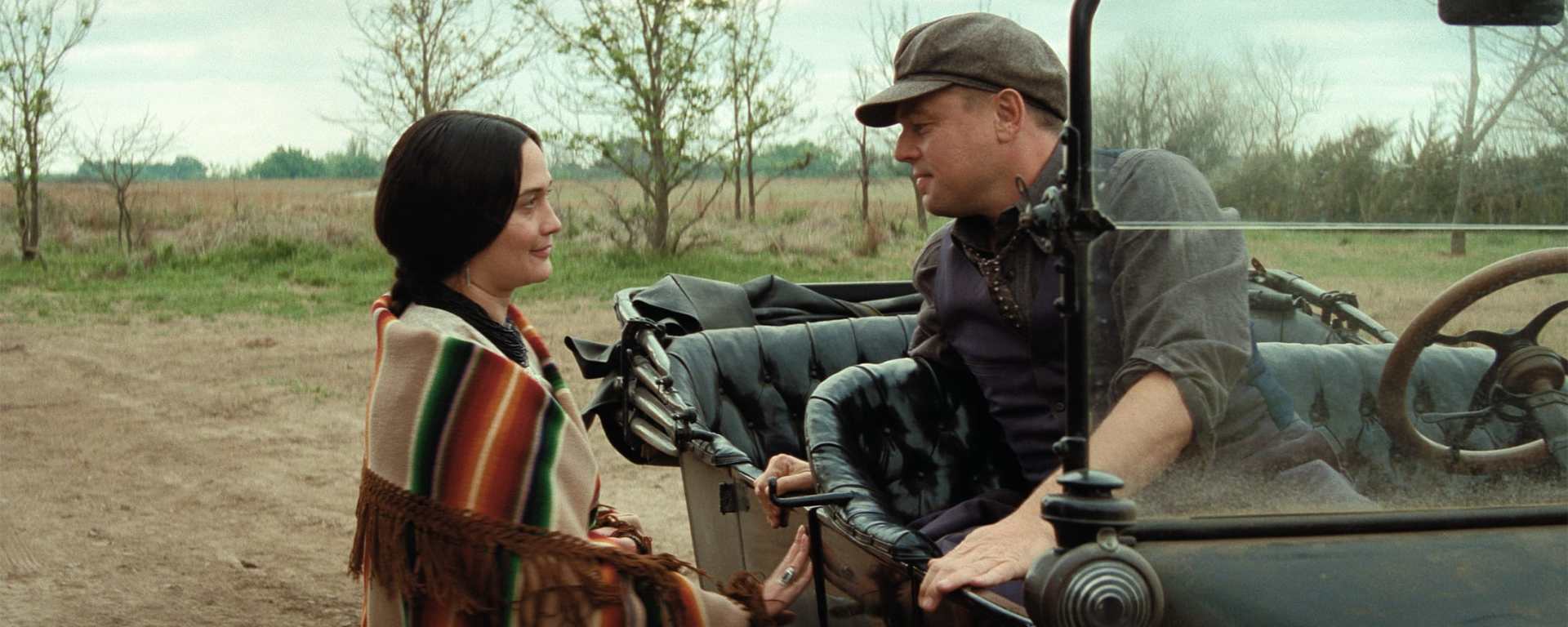
As Scorsese recounts in the interviews, the story of the Osage murders isn’t a question of “Who did it?” It’s a question of “Who didn’t do it?” The answer: Very few. So DiCaprio convinced Scorsese and co-screenwriter Eric Roth to find the heart of the story, the marriage of Ernest Burkhart (DiCaprio) and his Osage bride, Mollie (Lily Gladstone), and told the tale from the inside out.
Here, Killers nestles beautifully inside Scorsese’s oeuvre. Practically all of his movies are told from the inside out: from the perspective of someone doing wrong, knowing it’s wrong, and being unable to help themselves. Frankly, I’m surprised he considered the perspective shift such a shock.
But Killers is different. Scorsese’s films are populated with characters who know the rules of the game. Yes, they are doing wrong and operating outside of the law. But so is the other guy sitting across the table. When Tommy gets whacked in GoodFellas, everyone knows why—maybe even Tommy. In The Last Temptation of Christ, Jesus and Judas know the score and the roles they have to play. Their conflict isn’t the discovery of their destiny; it’s the acceptance. And the execution.
The Osage in Killers are afforded no such illumination. They are simply slaughtered by people they cannot understand for a reason they cannot comprehend.
“Twenty years ago, when I fought overseas in the Boxer Rebellion,” Chief Bonnicastle (Yancey Red Corn) tells FBI Agent White (now played by Jesse Plemons) in Killers. “I could see my enemy, and I knew who to kill. If we could see these people, we would kill them.”
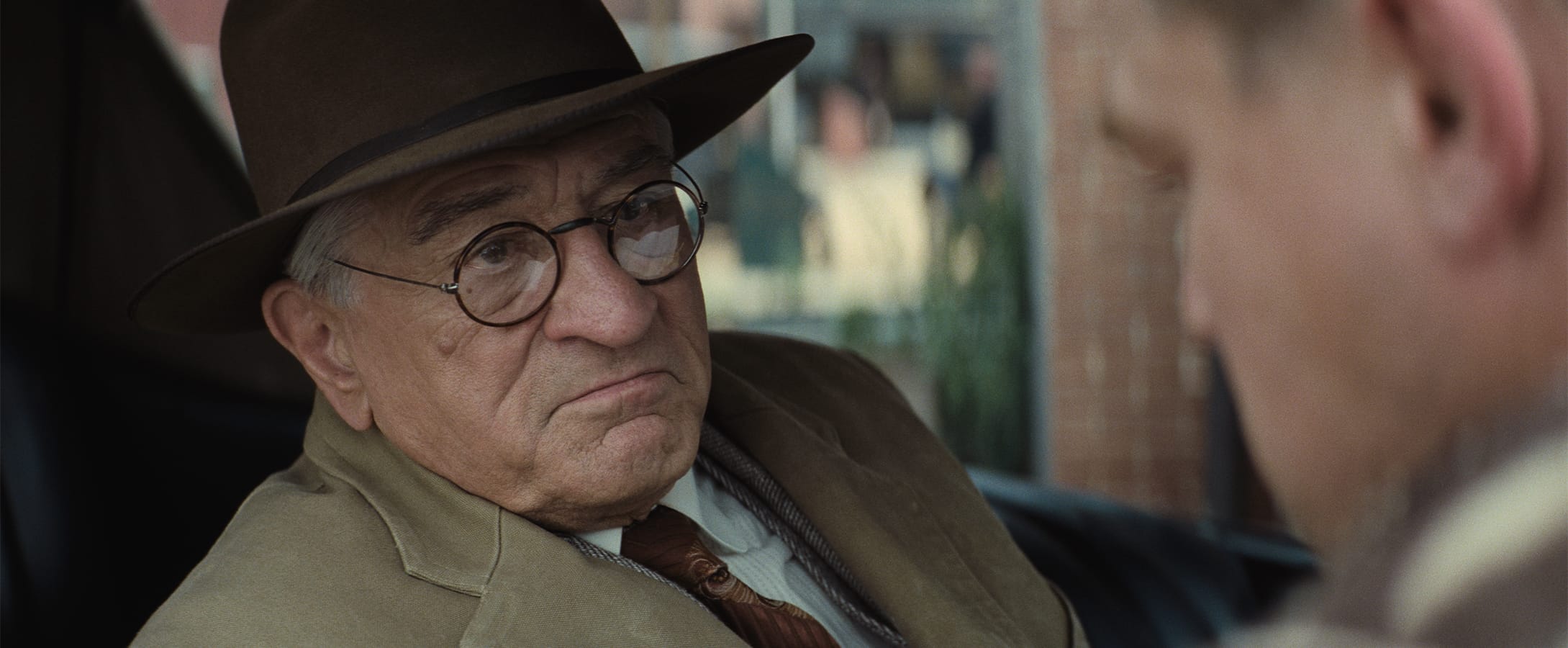
But because their enemy is so brazen, so painfully obvious in their motives, the wolves walk among the sheep. Scorsese hammers this point home in Ernest, his uncle Bill Hale (Robert De Niro), who makes himself a friend of the Osage, and every other white man who strides into town looking for easy wealth and easier living. Each one is more obvious and incompetent than the next. When one murder is set up to look like a suicide is botched by sheer stupidity, Hale and Ernest argue about the specific directions the assassin was told: “The front is the front and the back is the back!” Hale says in exasperation. Past Scorsese characters spoke in code. These ones are too arrogant to even try.
Hale isn’t the only one. After Kelsie Morrison (Louis Cancelmi) marries and then kills his Osage wife, he goes to an attorney with a speculation: If I adopt my dead wife’s kids, and they die, do I get their money? To which the attorney wonders if Kelsie didn’t just incriminate himself by fixing to kill two children. “I won’t,” Kelsie says, “if I don’t get the money.”
In another movie—hell, in another Scorsese movie—this line and “The front is the front and the back is the back!” could be laugh lines to break the tension. Not here. Scorsese doesn’t want to break the tension or entertain in the traditional sense. Instead of hurtling cameras, rapid cutting, and overlaying needle drops, Killers takes its time and strips away the entertainment of artifice.
This is where Scorsese’s inside-out approach means something different from his other pictures. Cinematographer Rodrigo Prieto favors wide shots that allow for the vastness of the West—the distance between places, the distance between people—while editor Thelma Schoonmaker slows the pace and allows the actors, particularly DiCaprio, to process what’s being asked of them. And what ramifications might come from their actions. Many of Scorsese’s leading men struggle with the push-pull of desire and guilt. DiCaprio’s Ernest struggles so mightily that his face freezes into a permanent scrunch. That scrunch is Ernest’s most egregious sin—a sin white America has yet to reckon with and cannot escape.
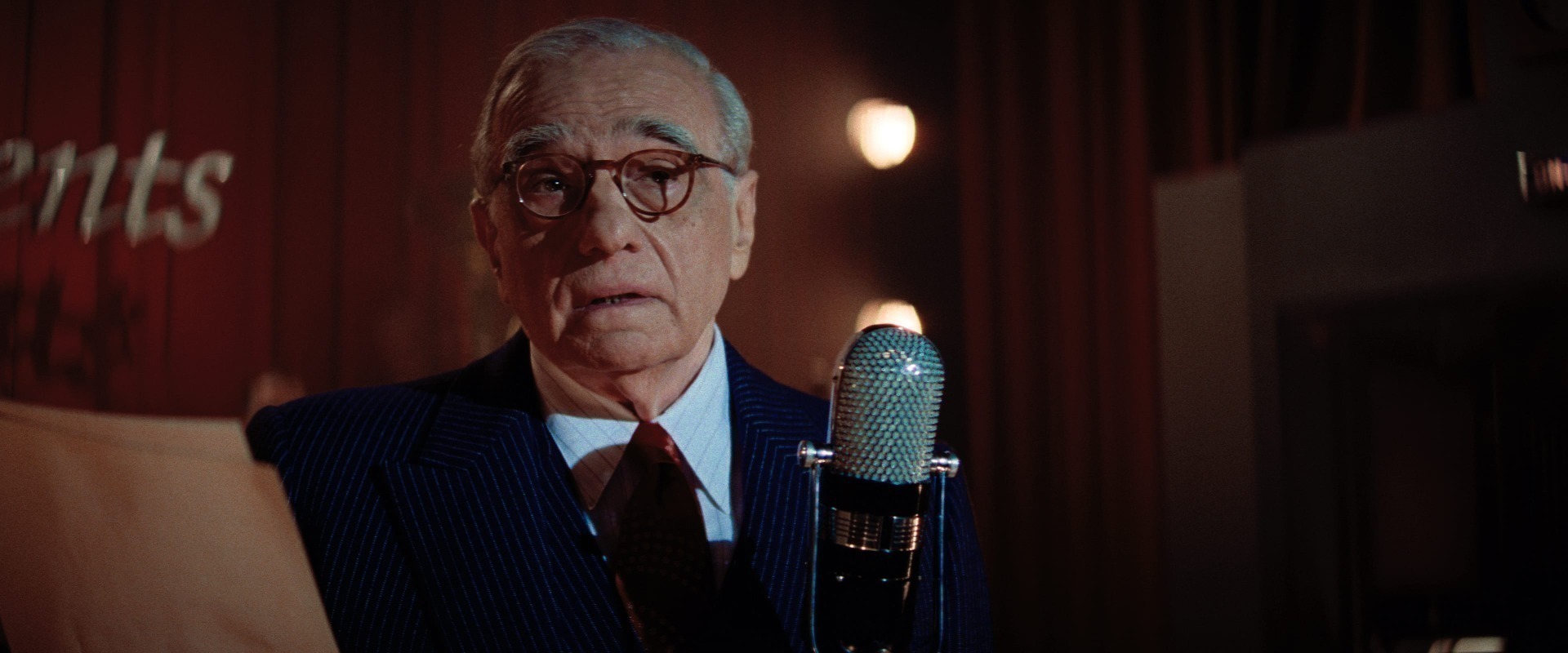
In 1990, friend and fellow filmmaker Michael Powell wrote that Scorsese’s output to that point was “all apprentice work. The great sermons are to come.” Killers of the Flower Moon is probably what Powell had in mind. The boy who grew up on the mean streets of New York found his way into a completely different geography and came out with a revelation that will remain for years to come.
Killers of the Flower Moon is now available on 4K UHD and Blu-ray from The Criterion Collection. The three-disc set includes the movie on both formats and collects interviews and documentaries on the making of the movie.
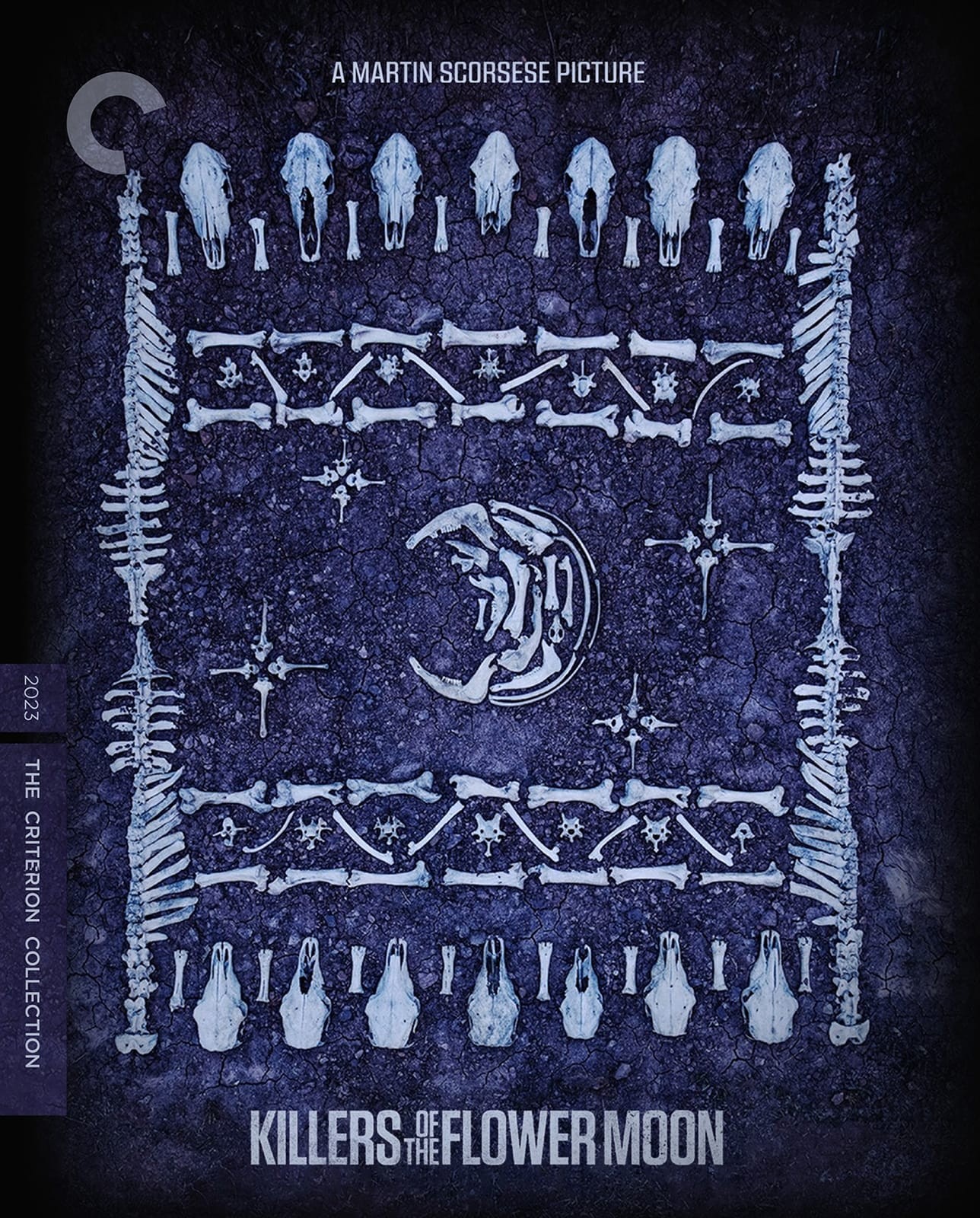
Killers of the Flower Moon (2023)
Directed by Martin Scorsese
Screenplay by Eric Roth, Martin Scorsese
Based on the book, Killers of the Flower Moon: The Osage Murders and the Birth of the FBI by David Grann
Produced by Dan Friedkin, Daniel Lupi, Martin Scorsese, Bradley Thomas
Starring: Leonardo DiCaprio, Robert De Niro, Lily Gladstone, Jesse Plemons, Tantoo Cardinal, John Lithgow, Brendan Fraser, Cara Jade Myers, Janae Collins, Jillian Dion
Paramount Pictures, Rated R, Running time 206 minutes, Premiered May 20, 2023 at the Cannes Film Festival
Discover more from Michael J. Cinema
Subscribe to get the latest posts sent to your email.
 Michael J. Cinema
You must be logged in to post a comment.